@Adcirruserp
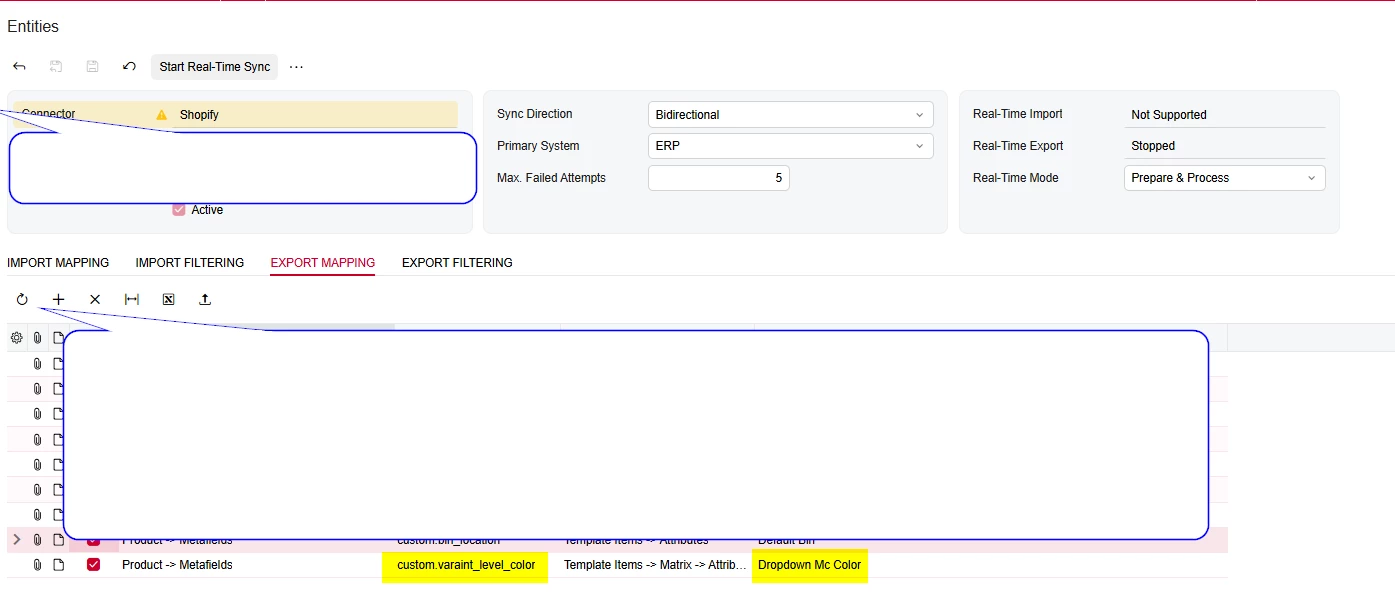
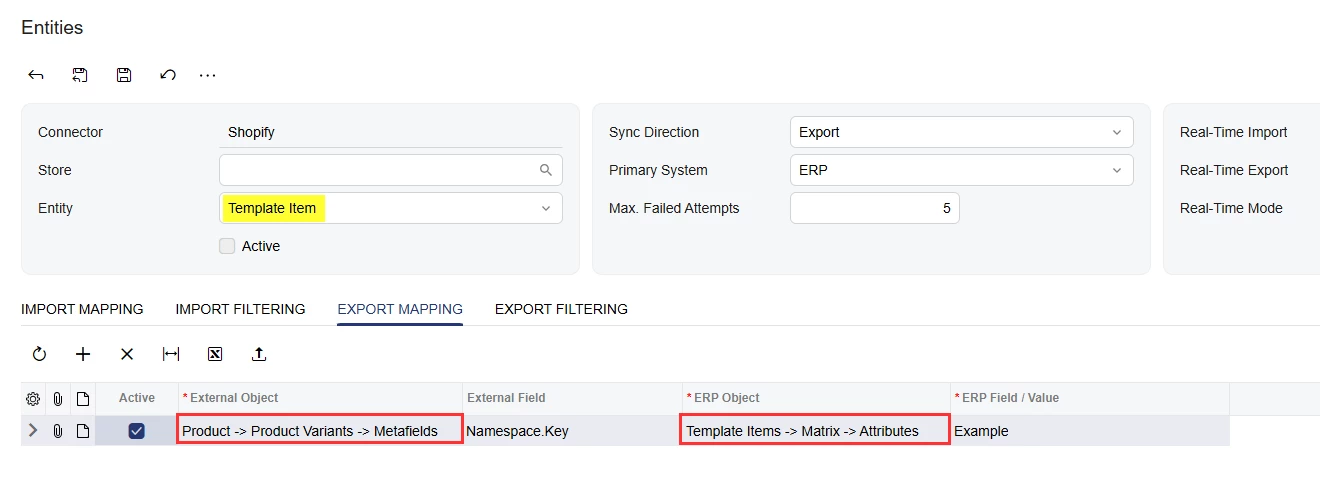
The standard entity mapping approach mentioned above is worth trying first. However, if you want to handle this through customization, you can extend SPTemplateItemProcessor.
- Override
MapBucketExport and execute the standard export first. - Access the Shopify variants through
bucket.Product?.Extern?.Variants. - Match the Shopify variant with the corresponding Acumatica matrix/child stock item using the SKU.
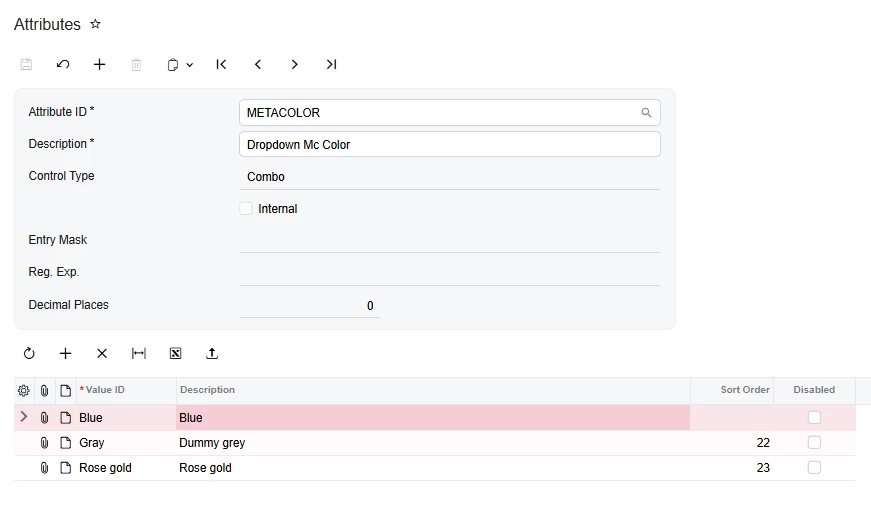
- Read the child item's attribute value from
AttributesValues. - Update the corresponding
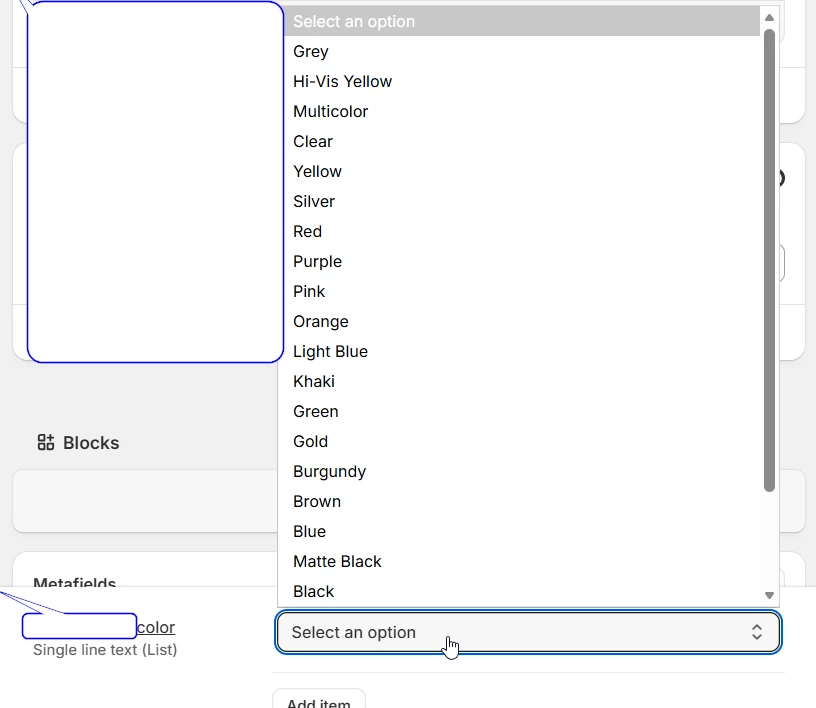
variant.VariantMetafields. - Since the Shopify metafield is a list type, serialize the value as a JSON array.
public delegate Task MapBucketExportDelegate(SPTemplateItemEntityBucket bucket, IMappedEntity existing, CancellationToken cancellationToken);

[PXOverride]
public async Task MapBucketExport(SPTemplateItemEntityBucket bucket, IMappedEntity existing, CancellationToken cancellationToken, MapBucketExportDelegate baseMethod)
{
    await baseMethod(bucket, existing, cancellationToken);

    ProductDataGQL external = bucket.Product?.Extern;

    if (external?.Variants == null)
        return;

    foreach (ProductVariantGQL variant in external.Variants)
    {
        // Match Shopify variant with Acumatica matrix item using SKU.
        // Read the corresponding child item attribute from AttributesValues.
        // Update the Shopify variant metafield.

        string value = JsonConvert.SerializeObject(new[] { attributeValue });

        MetafieldGQL metafield = variant.VariantMetafields?.FirstOrDefault(x =>
            x.Namespace == "custom" &&
            x.Key == "varaint_level_color");

        if (metafield != null)
            metafield.Value = value;
    }
}
Hope this helps!