Answer

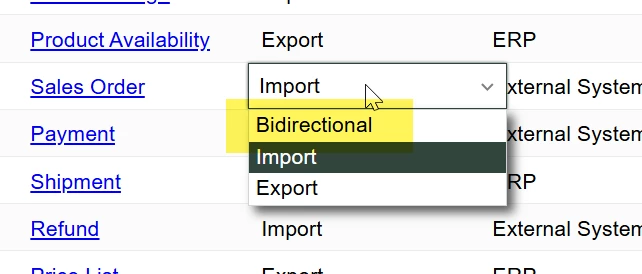
Import, but never again update Shopify orders imported to Acumatica

  • October 2, 2025
  • 5 replies
  • 99 views

Forum|alt.badge.img

We use the realtime sync to push new sales orders from Shopify into Acumatica when they are placed. We do not export sales orders from Acumatica back to Shopify.

This works great, but the Shopify connector is also syncing orders back into Acumatica whenever the order is updated in Shopify.

This is a big issue because the re-sync of orders overriding our changes to sales orders made during order processing in Acumatica.

Here's an example:

  • An order was placed and sent to Acumatica at ~8:40am
  • Our rep processed the order in Acumatica and made changes to the order.
  • After, they merged the account on the order in Shopify with a dupe.
  • This change to the Shopify order made the connector see that the order was updated in Shopify and re-synced the order at 11:59 AM.
  • This re-sync of  the order wiped out the changes that we made to the order in Acumatica after it had already been shipped.

We need the connector to do the initial sync of new Shopify orders, but NEVER update the order in Acumatica again.

I’ve tried to apply this using import filtering, but couldn’t find a clear path forward.

Best answer by vincea11

We were able to accomplish my original problem in the thread to prevent sales orders from being updated after the initial sync:

  • Turn the realtime sync mode for the sales orders entity to prepare only
  • Use automation scheduled to process the sales orders every 5 minutes
  • Apply a filter in the automation for ‘Created Date (ERP) ‘Is Empty’ so only orders that haven’t been imported are processed.

This leaves all modified orders alone and prevents them from being re-processed and updating sales orders.

That said, the need to control create vs update on a field level is still absolutely valid and totally needed. Please upvote ​@bwhite49 ‘s idea!

5 replies

bwhite49
Captain II
Forum|alt.badge.img+11
  • Captain II
  • October 2, 2025


We need the connector to do the initial sync of new Shopify orders, but NEVER update the order in Acumatica again.

That seems to be wish for a lot of customers. Specifically field level controls. Some fields need to be imported in and never resynced. Unfortunately, this functionality does not currently exist. 

At present, orders in Shopify and Acumatica need to be in complete sync. Typically, you would edit the order in Shopify and have in sync into Acumatica. Have you tried bidirectional sync for these orders? 


Forum|alt.badge.img
  • Author
  • October 2, 2025

@bwhite49 Thanks for the information - even though it’s not great.

Coming from NetSuite + Ceilgo + Shopify we are certainly missing many features we used to have that the Shopify Acumatica connection just falls short on. This includes matrix item sync per store, Colorado retail tax item sync, and this field/entity level controls over sync/update only.

I hope Acumatica is listening closely and acting quickly!

I will look into the Bidirectional sync, but the issue we have is we don’t want the updates pushed back up to Shopify.


bwhite49
Captain II
Forum|alt.badge.img+11
  • Captain II
  • October 2, 2025

I just created this idea to address this issue. Feel free to upvote...

Have option to disable re-sync for fields in entities screen commerce module | Community


Forum|alt.badge.img
  • Author
  • October 2, 2025

I have upvoted, thank you!


Forum|alt.badge.img
  • Author
  • Answer
  • October 3, 2025

We were able to accomplish my original problem in the thread to prevent sales orders from being updated after the initial sync:

  • Turn the realtime sync mode for the sales orders entity to prepare only
  • Use automation scheduled to process the sales orders every 5 minutes
  • Apply a filter in the automation for ‘Created Date (ERP) ‘Is Empty’ so only orders that haven’t been imported are processed.

This leaves all modified orders alone and prevents them from being re-processed and updating sales orders.

That said, the need to control create vs update on a field level is still absolutely valid and totally needed. Please upvote ​@bwhite49 ‘s idea!