


Best approach for integration — Web Service Endpoints (Generic Inquiry) vs OData?
Hi all,
I'd like some advice on the best way to build an integration with Acumatica. What's the recommended approach — going through standard Web Service Endpoints (via Generic Inquiry or standart endpoint) or using OData?
What I need to retrieve:
- Account balances as of a given date
- Transactions (including base currency) for a specific period
- Currency exchange rates for a specific period
What I've tried so far:
I created several Generic Inquiries and exposed them through a Web Service Endpoint.
When I tested it by pulling transactions(via standart JournalTransaction) for a single month (to get the line details I had to pass $expand), execution time was around 14–60 seconds. Our demo instance originally had 16 GB of RAM; after bumping it up to 64 GB, performance improved to around 5–15 seconds — but that's still pretty slow for demo ~155 transaction per month.
2019-01 [2019-01-01 -> 2019-02-01]: 359 transactions in 9.74s
2019-02 [2019-02-01 -> 2019-03-01]: 334 transactions in 4.70s
2019-03 [2019-03-01 -> 2019-04-01]: 358 transactions in 5.82s
2019-04 [2019-04-01 -> 2019-05-01]: 364 transactions in 4.64s
2019-05 [2019-05-01 -> 2019-06-01]: 348 transactions in 4.71s
2019-06 [2019-06-01 -> 2019-07-01]: 342 transactions in 5.44s
2019-07 [2019-07-01 -> 2019-08-01]: 401 transactions in 5.41s
2019-08 [2019-08-01 -> 2019-09-01]: 333 transactions in 5.49s
2019-09 [2019-09-01 -> 2019-10-01]: 333 transactions in 5.55s
2019-10 [2019-10-01 -> 2019-11-01]: 368 transactions in 5.89s
2019-11 [2019-11-01 -> 2019-12-01]: 313 transactions in 6.87s
2019-12 [2019-12-01 -> 2020-01-01]: 407 transactions in 6.92s
2020-01 [2020-01-01 -> 2020-02-01]: 445 transactions in 10.10s
2020-02 [2020-02-01 -> 2020-03-01]: 378 transactions in 8.95s
2020-03 [2020-03-01 -> 2020-04-01]: 386 transactions in 8.87s
2020-04 [2020-04-01 -> 2020-05-01]: 429 transactions in 9.55s
2020-05 [2020-05-01 -> 2020-06-01]: 442 transactions in 12.04s
2020-06 [2020-06-01 -> 2020-07-01]: 438 transactions in 10.85s
2020-07 [2020-07-01 -> 2020-08-01]: 395 transactions in 9.72s
2020-08 [2020-08-01 -> 2020-09-01]: 631 transactions in 14.86s
2020-09 [2020-09-01 -> 2020-10-01]: 452 transactions in 12.93s
2020-10 [2020-10-01 -> 2020-11-01]: 441 transactions in 16.29s
2020-11 [2020-11-01 -> 2020-12-01]: 437 transactions in 30.35s
2020-12 [2020-12-01 -> 2021-01-01]: 438 transactions in 29.15s
2021-01 [2021-01-01 -> 2021-02-01]: 409 transactions in 13.67s
2021-02 [2021-02-01 -> 2021-03-01]: 395 transactions in 12.21s
2021-03 [2021-03-01 -> 2021-04-01]: 370 transactions in 14.37s
2021-04 [2021-04-01 -> 2021-05-01]: 356 transactions in 13.89s
2021-05 [2021-05-01 -> 2021-06-01]: 372 transactions in 43.54s
2021-06 [2021-06-01 -> 2021-07-01]: 338 transactions in 14.13s
2021-07 [2021-07-01 -> 2021-08-01]: 374 transactions in 14.45s
2021-08 [2021-08-01 -> 2021-09-01]: 339 transactions in 15.49s
Then I tried exporting the same data via OData, and it ran significantly faster.
My questions:
- Why are standard Web Service Endpoints so slow compared to OData?
- Is there anything I can do to speed up the Web Service Endpoint approach, if it's possible at all?
- Which approach would you recommend for this kind of integration?
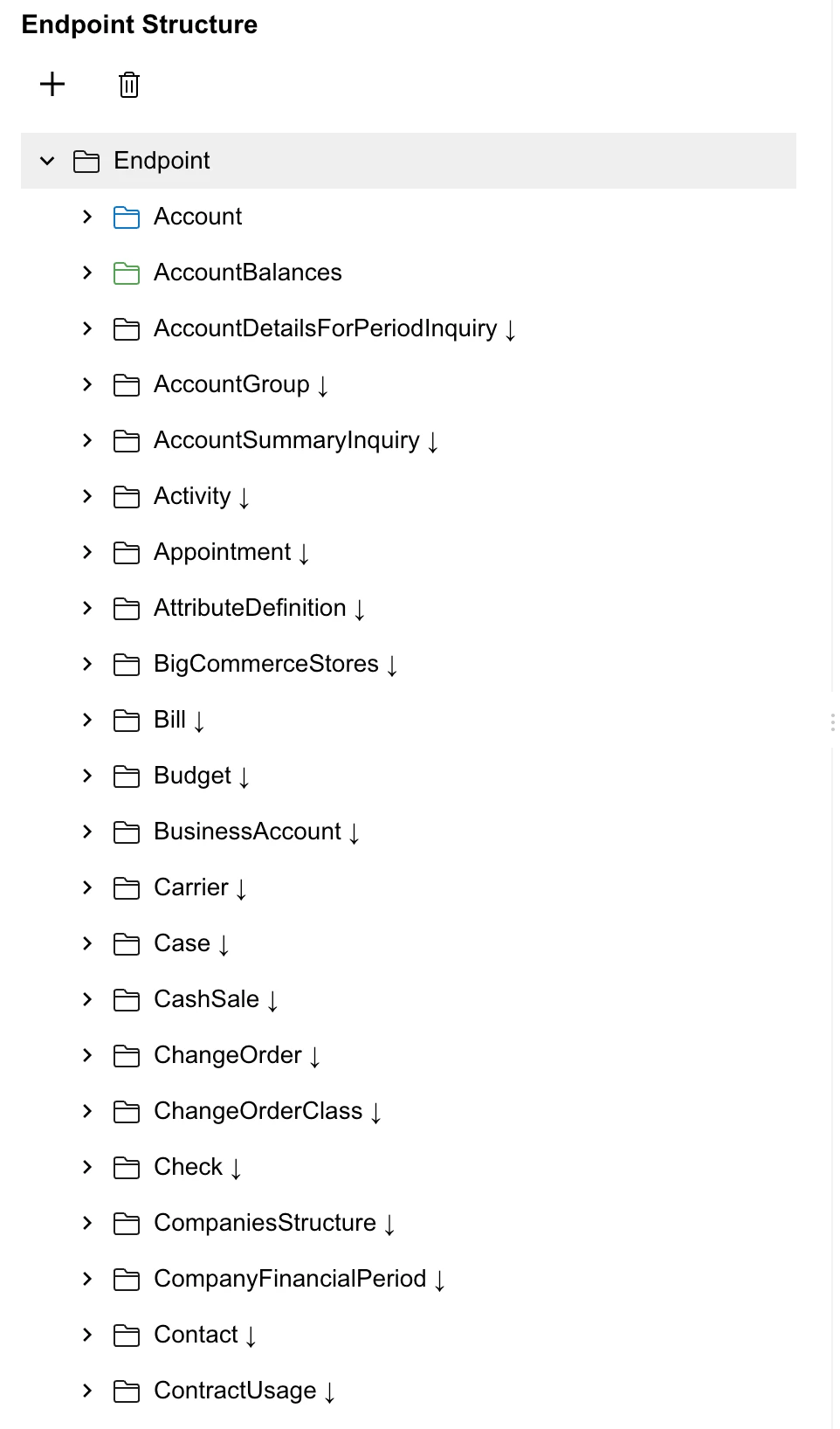
One more thing — could the issue be related to the fact that I'm using a custom Web Service Endpoint? It was extended from the base endpoint and contains all the standard endpoints as well.
Thanks in advance for any insights!